

How I Coach
My coaching is calm, structured, and grounded in lived experience. I work in partnership with you, using an approach that honours your identity, your strengths, and your emotional world.
ADHD shows up differently for everyone, and many people come to coaching after years of feeling misunderstood or misdiagnosed. My practice is aligned with ICF principles: presence, curiosity, cultural awareness, and supporting you to generate your own insights and direction.
ADHD is shaped by many layers, identity, culture, gender, environment, work, relationships, and personal history. During a seven‑day intensive with Goldmind Academy in Granada Spain, I was the only man in a cohort of women navigating hormonal shifts from monthly cycles to peri‑menopause and menopause. Hearing their experiences gave me a deep understanding of how ADHD interacts with hormonal change and lived reality.
It was also where I recognised how often girls and women are overlooked. For decades, ADHD criteria were based on boys, leaving many girls labelled as anxious, sensitive, daydreamy, or “too emotional.” Many were misdiagnosed with depression, anxiety, or even bipolar disorder, carrying those labels for years without anyone considering neurodivergence.
This insight reshaped the way I coach. It taught me to see every client through multiple lenses and honour the wider context of their life. Every story is layered, personal, and deserving of curiosity and respect, and that intersectional awareness sits at the heart of my practice.

What Sessions Look Like
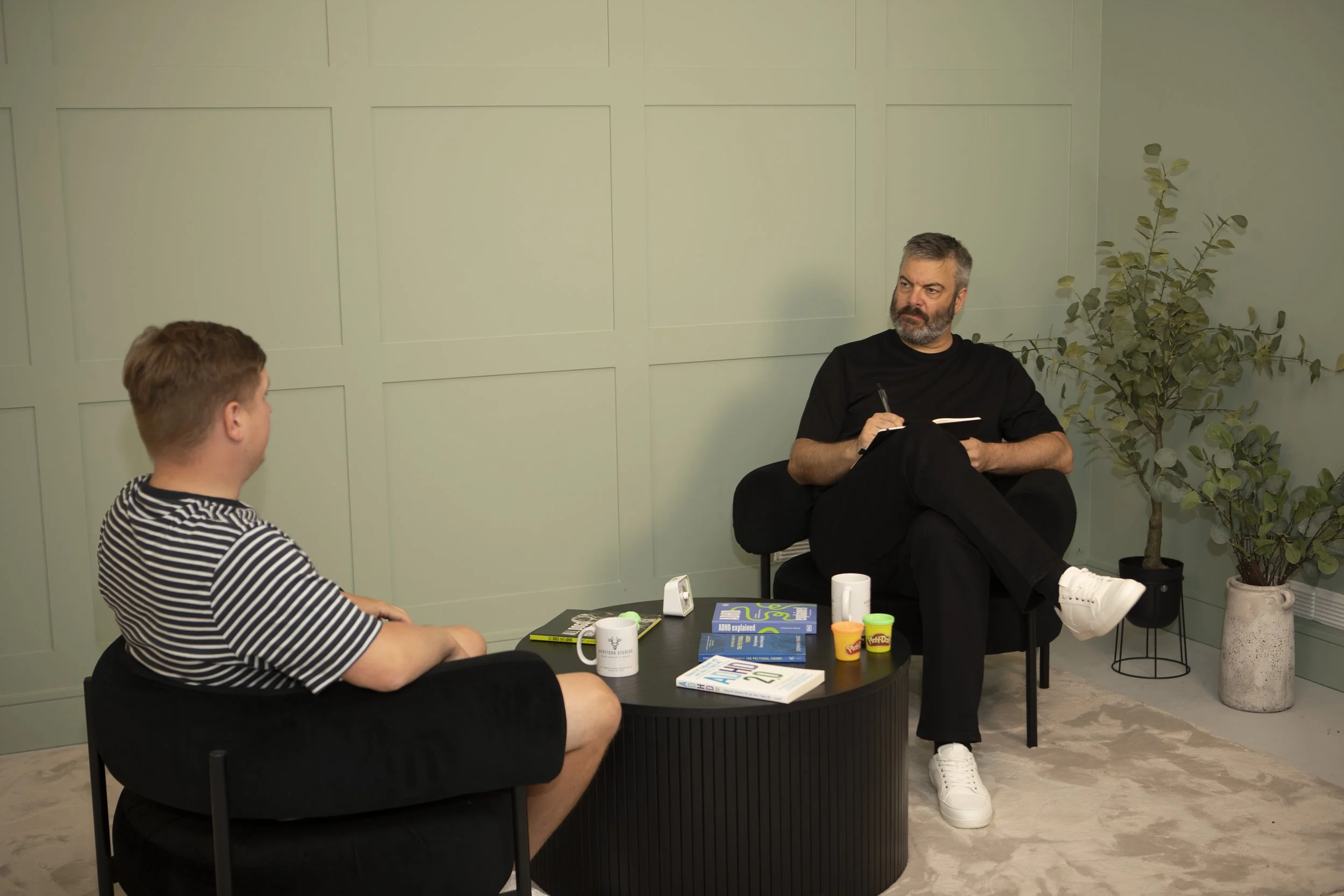
Each session is a calm, collaborative space where you can slow down, reflect, and explore your lived experience. My role is to partner with you, supporting your thinking, deepening your awareness, and helping you create meaningful, sustainable change.
Everything we do is aligned with ICF principles: presence, curiosity, cultural awareness, and respect for your autonomy.
Sessions are 50 minutes, giving you time to settle, explore, and leave with clarity and direction.
A grounding check‑in
We begin by noticing where you are emotionally, mentally, and physically. This helps us work with your energy and create a supportive pace for the session.
Strengths‑based reflection
We identify the strengths you already use, creativity, resilience, intuition, empathy, hyperfocus, and explore how they can support your goals. This keeps the work empowering and aligned with the ICF belief in client capability and resourcefulness.
Emotions‑informed awareness
Emotions are valuable information. They reveal what matters, what drains you, what energises you, and where your boundaries need to be.
We explore emotional patterns with curiosity rather than judgement, helping you respond with clarity instead of overwhelm.
Collaborative goal‑setting
You choose the direction; I support your thinking and help you uncover what’s possible.
We co‑create goals that feel meaningful, achievable, and aligned with your values, not goals driven by pressure or perfectionism.
Real‑world tools and supportive systems
You leave each session with practical strategies that work with your ADHD, not against it.
These tools are tailored to your strengths, your environment, and your lived experience.
A non‑judgemental partnership
Coaching is a collaborative relationship. You bring your lived experience; I bring presence, curiosity, and structure. Together, we create space for growth, clarity, and self‑trust.